photonpowers.com

Premium Solar Header

Author name: Photon Powers Enterprises

Uncategorized

Go Solar in 2026: The Complete Guide to the PM Surya Ghar Muft Bijli Yojana

Go Solar in 2026: The Complete Guide to the PM Surya Ghar Muft Bijli Yojana Are you tired of watching your monthly electricity bills climb higher every season? You aren’t alone. In 2026, more Indian households than ever are taking control of their energy future by switching to the sun. Thanks to the PM Surya Ghar Yojana, transitioning to clean power has never been more affordable or straightforward. If you’ve been considering solar pannels but felt overwhelmed by the technicalities, this guide is for you. What is the PM Surya Ghar Muft Bijli Yojana? Launched to make solar energy solutions accessible to everyone, the PM Surya Ghar Muft Bijli Yojana is a landmark government initiative designed to help one crore households across India reduce their electricity costs. The core benefit is simple: by installing rooftop solar, you can generate up to 300 units of electricity for free every month. For many families, this translates to near-zero electricity bills, providing long-term financial relief and energy independence. Why Switch to Solar in 2026? Beyond the benefit of “free” electricity, going solar is a smart investment for several reasons: The Power of Professional Solar EPC One term you will hear often during your journey is solar EPC. EPC stands for Engineering, Procurement, and Construction. Think of a solar EPC provider as your one-stop shop. Instead of hiring separate contractors for design, equipment sourcing, and installation, an EPC company manages the entire project for you. They handle everything from assessing your roof’s feasibility and choosing the right equipment to obtaining necessary permits and commissioning the system. Choosing an experienced solar EPC  partner ensures your installation is compliant, efficient, and eligible for the subsidy. How to Apply for Your Subsidy Ready to get started? The process is entirely digital and transparent: Final Thoughts Switching to solar isn’t just about cutting costs; it’s about choosing a sustainable lifestyle. With the government’s support, professional solar solutions are now within reach for every middle-class home. Don’t wait for the next bill cycle to surprise you. Reach out to an authorized solar EPC partner today, explore your options, and start your journey toward a brighter, cheaper, and cleaner energy future.

Uncategorized

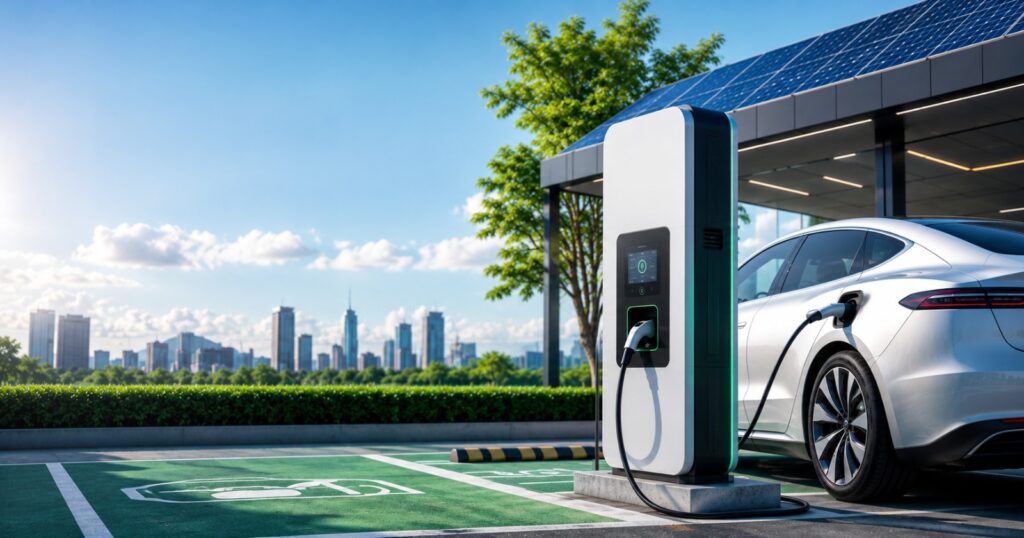
The Future of Energy: Professional EV Charging Solutions from Photon Powers

The Future of Energy: Professional EV Charging Solutions from Photon Powers The streets of India are changing. As you drive through your city, the silent hum of electric vehicles (EVs) is becoming the new soundtrack of our urban commute. This transition isn’t just about cleaner air or reduced fuel bills; it is a fundamental shift in how we power our lives. At Photon Powers, we believe that the true potential of this mobility revolution lies in the strength of the infrastructure supporting it. Whether you are a business owner looking to future-proof your office, a housing society committee member, or an individual EV enthusiast, the right EV charger is no longer a luxury it is a necessity. Empowering the Transition: The PM E-DRIVE Scheme The Government of India’s PM E-DRIVE Scheme is a cornerstone of this transformation, injecting massive momentum into the national EV ecosystem. With a significant outlay aimed at expanding charging infrastructure, the scheme is designed to make electric mobility accessible and reliable for everyone. For property owners and businesses, this is a pivotal moment. The scheme provides robust support for the deployment of public and private charging networks, significantly lowering the barrier to entry for installing high-quality EV charging stations. By aligning with these national objectives, Photon Powers helps you not only contribute to a greener India but also position your property or business at the forefront of the sustainable energy movement. Why Professional Infrastructure Matters We often hear the term “range anxiety,” but the real challenge is “infrastructure accessibility.” When you search for EV chargers near me, you aren’t just looking for a plug point you are looking for reliability, speed, and safety. As a dedicated EV charger solution provider, Photon Powers understands that a one-size-fits-all approach doesn’t work. A fleet operator needs rapid DC fast-charging to minimize downtime, while a residential complex requires smart, load-balanced AC charging that integrates seamlessly with existing power grids. Our professional approach includes: Tailored Solutions for Every Need The future belongs to those who prepare for it today. At Photon Powers, we specialize in comprehensive EV charging setups that are as efficient as they are easy to use. Join the Green Revolution Transitioning to electric mobility is a journey we are taking together. With the backing of initiatives like the PM E-DRIVE Scheme, there has never been a better time to invest in your own charging infrastructure. At Photon Powers, we don’t just sell hardware; we provide a partnership for a cleaner, electrified future. Whether you are ready to install your first charger or planning a city-wide network, our team is here to provide the expertise, support, and technology to power your journey. The future of energy is here. Are you ready to charge ahead? Contact Photon Powers today to discover how we can transform your space into a hub for sustainable mobility.

Uncategorized

How Co-operative Housing Societies Can Reduce Electricity Bills by 90%

How Co-operative Housing Societies Can Reduce Electricity Bills by 90% For co-operative housing societies (CHS) managing rising maintenance costs, energy consumption is often the single largest shared expense. From running elevators and heavy-duty water pumps to illuminating basement parking lots and sprawling clubhouses, the common-area power demand adds up quickly. Fortunately, smart residential communities are discovering a highly effective way to reduce electricity bills and shield themselves from rising tariffs. By transitioning to rooftop solar energy, a housing society can practically eliminate its conventional grid dependency. Here is a practical roadmap detailing how your society can secure up to 90% savings on common-area power costs. Why Common Areas Drain Your Society’s Funds Before diving into the solution, it is crucial to understand the source of the problem. Common-area utilities run almost 24/7. Under commercial or high-slab domestic tariffs, these utilities result in steep monthly bills. The Ultimate Solution: Rooftop Solar with Net Metering The most reliable strategy to reduce electricity bills by up to 90% is installing a grid-tied rooftop solar system. This approach operates on a highly efficient mechanism: 1. Solar Generation & Net Metering During the day, high-efficiency solar panels convert sunlight into electricity, powering your lifts and water pumps in real-time. Any surplus energy generated is exported back to the state electricity distribution company (DISCOM) grid. A bi-directional net meter tracks the export and import. At the end of the billing cycle, the society is only charged for the “net” consumption. 2. Capitalizing on Government Subsidies Under the PM Surya Ghar Muft Bijli Yojana, housing societies in India can claim a central subsidy of ₹18,000 per kW (capped up to 500 kW) for common-area solar projects. This drastically reduces the initial capital expenditure (CAPEX), bringing down the payback period to just 4 to 5 years. How to Get Started: A Step-by-Step Approach To ensure smooth transition and legally sound implementation, societies should follow this structured process: Conclusion Transitioning to rooftop solar is no longer just an environmental choice, it is a smart financial decision. By utilizing empty terrace spaces, securing government subsidies, and leveraging net metering, co-operative housing societies can easily reduce electricity bills by up to 90% while locking in free energy for the next 25 years. The resulting savings can be redirected toward lowering monthly maintenance charges or upgrading society infrastructure, directly boosting property appreciation.

Uncategorized

Photon Power Checklist: 5 Things to Verify Before Choosing a Rooftop Solar Installer

Photon Power Checklist: 5 Things to Verify Before Choosing a Rooftop Solar Installer Switching to solar energy is one of the smartest financial decisions you can make. However, the long-term success of your clean energy transition depends heavily on the partner you choose to design and install your system. Selecting the right rooftop solar installer is the single most critical step in securing high energy yields, seamless grid approvals, and a stress-free transition to green energy. 5 Things to Verify Before You Sign the Solar Agreement Before you sign any contracts, use this technical checklist to vet your prospective rooftop solar installer. 1. Government Empanelment and Policy Alignment In India, the transition to solar is heavily supported by central initiatives like the PM Surya Ghar: Muft Bijli Yojana. However, you cannot claim government subsidies unless your provider is an empanelled vendor on the national solar portal. Verify that they use components approved under the Ministry of New and Renewable Energy (MNRE) guidelines, including Approved List of Models and Manufacturers (ALMM) panels and BIS-certified inverters. 2. Comprehensive Pre-Installation Site Survey A trustworthy rooftop solar installer will never offer an accurate financial quotation without conducting a thorough physical inspection of your roof. Avoid companies that rely solely on satellite images. A hands-on site survey must evaluate: 3. Structural and Mechanical Engineering Standards Your solar system is expected to withstand harsh weather conditions, including high wind speeds, for over 25 years. Verify that your solar provider uses robust, hot-dip galvanized (HDG) steel or anodized aluminum mounting structures rather than thin, easily corroded painted metals. Ask about their roof-anchoring methodology and how they plan to maintain your roof’s waterproofing integrity. 4. Advanced Electrical Protection Systems Rooftop solar systems generate high-voltage direct current (DC) electricity. A premier installation requires separate, dedicated earthing pits for the solar structure, inverter, and the lightning protection system. Ensure your quote includes both AC and DC Distribution Boxes (ACDB/DCDB) equipped with surge protection devices (SPDs) to protect your home’s electronics from sudden voltage spikes. 5. Multi-Layered Warranties and Local Service A standard warranty isn’t just a single document. Ensure your partner details the split-warranty coverage: Conclusion A rooftop solar plant is a massive 25-year engineering and financial asset, not a temporary appliance. While looking for the lowest price quote is tempting, choosing a certified, highly rated, and technically sound rooftop solar installer prevents expensive maintenance issues down the road. By ensuring your solar partner ticks off all five verification points on this checklist, you can move forward with absolute confidence, enjoying decades of free, uninterrupted, and sustainable electricity.

Uncategorized

Solar Panel Maintenance 101: How to Keep Your System Running at Peak Performance

Solar Panel Maintenance 101: How to Keep Your System Running at Peak Performance Investing in green energy is one of the smartest financial and environmental decisions you can make for your home. However, simply installing solar panels isn’t the end of the journey. To protect your investment and ensure you get the maximum financial return, understanding the basics of Solar Panel Maintenance is absolutely essential. While these setups are incredibly durable, regular care is the secret to keeping your system operating at peak efficiency year after year. Luckily, keeping your panels in top shape is easier than you might think. Simple Steps for Effective Solar Panel Maintenance For the most part, modern solar energy setups are incredibly low-maintenance because they lack moving parts. However, environmental factors can slowly degrade their performance over time. Dust, leaves, pollen, and bird droppings act as tiny shields that block sunlight from reaching the photovoltaic cells. Research shows that heavy buildup can reduce your energy output by 5% to 15%. Over a year, that minor drop translates to higher utility bills and wasted energy potential. To prevent these losses, a simple routine is all you need. For most homeowners, checking the system twice a year is more than enough. When undertaking your seasonal Solar Panel Maintenance routine, follow these three straightforward steps: While DIY cleaning is simple, sometimes you need to call in the experts. Incorporating a professional physical check into your overall Solar Panel Maintenance schedule every few years is highly recommended. Professionals can safely climb steep roofs, inspect the structural integrity of the racking system, and check the electrical wiring for any signs of wear, weathering, or pest damage. Protect Your Clean Energy Investment In the end, a little proactive effort goes a long way. Implementing a consistent routine for your Solar Panel Maintenance will maximize your long-term return on investment, protect your manufacturer’s warranty, and keep your home powered by clean, reliable energy for decades to come.

Uncategorized

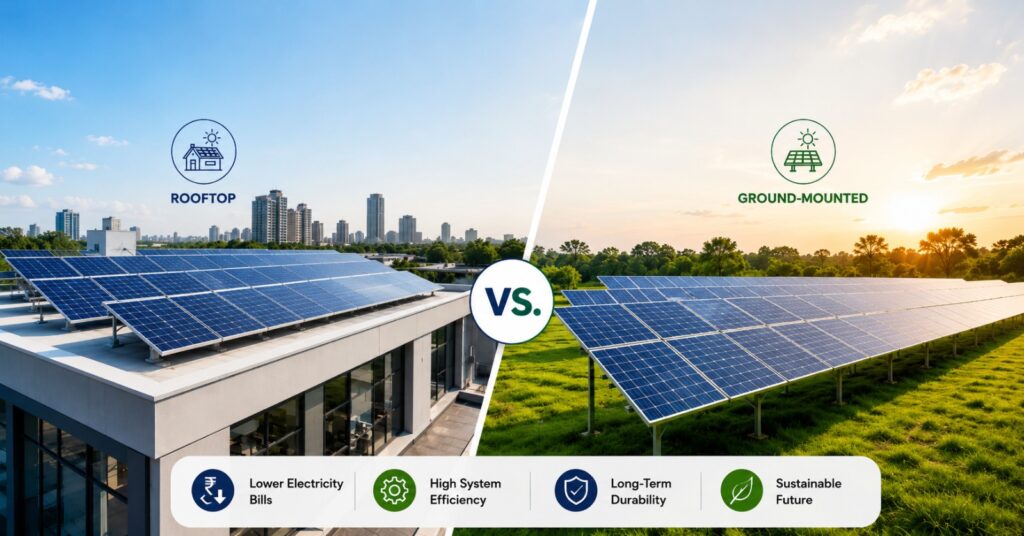
Rooftop vs. Ground-Mounted: Which Solar EPC Solution Is Right for Your Property?

Rooftop vs. Ground-Mounted: Which Solar EPC Solution Is Right for Your Property? So, you’ve decided to take the leap into renewable energy. It’s an exciting milestone not just for your bottom line, but for operational sustainability. But as you start exploring the technical side of things, you’ll quickly hit a fork in the road: rooftop installation or ground-mounted solar panels? Choosing the right path isn’t just about aesthetics; it’s about performance, space, and long-term ROI. When you partner with a professional solar EPC firm, they aren’t just installing panels they are architecting an energy system tailored to your specific environment. Let’s break down the pros and cons of these two common approaches to help you decide which EPC solar strategy fits your property best. The Case for Rooftop Solar: Maximizing Unused Space For many property owners, the roof is the most logical place for a solar rooftop system. It’s space that is otherwise serving no purpose, making it an excellent candidate for power generation. Why choose rooftop? The Trade-offs The biggest limitation is the roof itself. If your roof is old, has a complex shape, or faces the wrong direction, you might face mounting challenges. A quality solar EPC solution will always conduct a structural integrity assessment first. If your roof isn’t up to the task, or if it doesn’t have the surface area to meet your energy goals, rooftop might not be the answer. The Case for Ground-Mounted Solar: Power and Flexibility If you have the luxury of open land, ground-mounted solar panels offer a level of flexibility that rooftop systems simply can’t match. Why choose ground-mounted? The Trade-offs Ground-mounted arrays require a dedicated footprint. If your property is space-constrained, this might not be an option. Additionally, you’ll need to account for land preparation and soil stability. Technical Considerations for Your Solar Energy Project When evaluating an EPC solar partner, look beyond the initial quote and focus on their technical proficiency in three critical areas: Making the Final Decision Ultimately, the right path depends on your property’s specific requirements. If your priority is utilizing existing infrastructure and preserving your land for other uses, a solar rooftop system is usually the gold standard. If you have the space and want to maximize every kilowatt-hour through perfect orientation, ground-mounted solar panels are likely your best bet. The beauty of working with a professional is that you don’t have to guess. They will model both scenarios, compare the generation potential, and help you visualize the long-term impact on your electricity costs. Ready to own your energy? The best time to start your solar energy project is today. So, you’ve decided to take the leap into renewable energy. It’s an exciting milestone not just for your bottom line, but for operational sustainability. But as you start exploring the technical side of things, you’ll quickly hit a fork in the road: rooftop installation or ground-mounted solar panels? Choosing the right path isn’t just about aesthetics; it’s about performance, space, and long-term ROI. When you partner with a professional solar EPC firm, they aren’t just installing panels they are architecting an energy system tailored to your specific environment. Let’s break down the pros and cons of these two common approaches to help you decide which EPC solar strategy fits your property best. The Case for Rooftop Solar: Maximizing Unused Space For many property owners, the roof is the most logical place for a solar rooftop system. It’s space that is otherwise serving no purpose, making it an excellent candidate for power generation. Why choose rooftop? The Trade-offs The biggest limitation is the roof itself. If your roof is old, has a complex shape, or faces the wrong direction, you might face mounting challenges. A quality solar EPC solution will always conduct a structural integrity assessment first. If your roof isn’t up to the task, or if it doesn’t have the surface area to meet your energy goals, rooftop might not be the answer. The Case for Ground-Mounted Solar: Power and Flexibility If you have the luxury of open land, ground-mounted solar panels offer a level of flexibility that rooftop systems simply can’t match. Why choose ground-mounted? The Trade-offs Ground-mounted arrays require a dedicated footprint. If your property is space-constrained, this might not be an option. Additionally, you’ll need to account for land preparation and soil stability. Technical Considerations for Your Solar Energy Project When evaluating an EPC solar partner, look beyond the initial quote and focus on their technical proficiency in three critical areas: Making the Final Decision Ultimately, the right path depends on your property’s specific requirements. If your priority is utilizing existing infrastructure and preserving your land for other uses, a solar rooftop system is usually the gold standard. If you have the space and want to maximize every kilowatt-hour through perfect orientation, ground-mounted solar panels are likely your best bet. The beauty of working with a professional is that you don’t have to guess. They will model both scenarios, compare the generation potential, and help you visualize the long-term impact on your electricity costs. Ready to own your energy? The best time to start your solar energy project is today.

Scroll to Top